How to Apply for SNAP Benefits in New York
Updated August 31, 2026
The Supplemental Nutrition Assistance Program (SNAP), formerly known as food stamps, helps eligible New Yorkers purchase groceries and other qualifying food items.
SNAP can be especially valuable for older adults, people with disabilities, caregivers and families managing high housing, medical or everyday living expenses. However, eligibility is not determined by income alone. Household size, expenses, age, disability status and other circumstances can all affect whether you qualify and how much assistance you receive.
If you are considering applying for SNAP in New York in 2026, here’s what you should know about the current eligibility rules, income limits, application process and work requirements.
Who Is Eligible for SNAP in New York?
SNAP eligibility is based on several factors, including:
- Household size and composition
- Gross and net household income
- Earned versus unearned income
- Housing and utility expenses
- Dependent-care expenses
- Certain medical expenses for elderly or disabled household members
- Citizenship or qualifying immigration status
- Applicable SNAP work requirements
There is not one income limit that applies to every New York household.
New York uses expanded categorical eligibility rules that allow certain households to qualify under higher gross-income thresholds. For example, households with earned income may qualify under a higher limit than households without earned income, while households containing an elderly or disabled person or paying out-of-pocket dependent-care expenses may qualify under an even higher threshold. (otda.ny.gov)
The only way to receive an official SNAP eligibility determination is to apply.
2026 SNAP Income Limits in New York
The following guidelines are effective through September 30, 2026.
| Household Size | Standard 130% Gross Limit | Earned-Income Household 150% Limit | Elderly/Disabled or Dependent-Care 200% Limit | Maximum Monthly SNAP Benefit |
|---|---|---|---|---|
| 1 | $1,696 | $1,957 | $2,608 | $298 |
| 2 | $2,292 | $2,644 | $3,525 | $546 |
| 3 | $2,888 | $3,332 | $4,442 | $785 |
| 4 | $3,483 | $4,019 | $5,358 | $994 |
| 5 | $4,079 | $4,707 | $6,275 | $1,183 |
| 6 | $4,675 | $5,394 | $7,192 | $1,421 |
| 7 | $5,271 | $6,082 | $8,108 | $1,571 |
| 8 | $5,867 | $6,769 | $9,025 | $1,789 |
For larger households, additional amounts are added for each household member.
These numbers should be used as general guidelines rather than a determination that you do or do not qualify. The income test that applies to your household depends on your circumstances.
For example, a household containing a person age 60 or older or a person with a qualifying disability may potentially qualify even when gross income exceeds 200% of the federal poverty level if the household satisfies applicable net-income and resource requirements. (otda.ny.gov)
SNAP standards are adjusted annually. The figures above apply from October 1, 2025 through September 30, 2026.
Does SNAP Have an Asset Limit in New York?
Not every SNAP household in New York is subject to an asset or resource test.
Many households qualify under New York’s expanded categorical eligibility rules and are therefore not required to satisfy a separate SNAP resource test.
When a resource test does apply, federal FY2026 limits are generally $3,000 for most households and $4,500 when a household contains a person age 60 or older or a person with a disability. (fns.usda.gov)
Because the rules differ depending on household circumstances, having money in a checking or savings account does not necessarily mean you are ineligible for SNAP.
Can You Receive SNAP If You Already Have Medicaid or CDPAP?
Yes. SNAP, Medicaid and the Consumer Directed Personal Assistance Program (CDPAP) are separate programs with separate eligibility requirements.
Receiving Medicaid or CDPAP services does not automatically qualify you for SNAP, but someone who qualifies for Medicaid may also meet SNAP’s financial requirements.
This can be particularly relevant for older adults and people with disabilities who receive home care. SNAP rules allow certain deductions and eligibility provisions that may apply differently to elderly or disabled household members.
If you are a CDPAP personal assistant applying for SNAP yourself, report the income and household information requested on the SNAP application and allow the administering agency to determine how the applicable SNAP rules affect your case.
Do You Have to Be a U.S. Citizen to Get SNAP?
U.S. citizens may qualify for SNAP, but the rule is broader than simply requiring citizenship or permanent resident status.
Certain qualified non-citizens can also receive SNAP if they meet applicable program requirements. Eligibility depends on immigration category and, in some circumstances, factors such as length of U.S. residency, work history, age or disability.
Importantly, every person in a household does not have to qualify for SNAP for eligible household members to receive benefits.
For example, a parent who is not eligible for SNAP may still submit an application on behalf of eligible children. NYC HRA specifically states that an undocumented parent applying for SNAP for eligible children does not need to obtain a Social Security number for themselves solely to apply on the children’s behalf. (nyc.gov)
Applicants should provide citizenship or immigration information for the household members who are actually applying for SNAP benefits.
SNAP Work Requirements Changed in 2026
One of the most important SNAP changes for 2026 involves federal work requirements for certain Able-Bodied Adults Without Dependents, commonly called ABAWDs.
In New York City, HRA began enforcing the updated requirements on March 1, 2026.
Generally, the ABAWD rules may apply to someone who:
- Is between ages 18 and 64
- Does not live with a child under age 14
- Does not have a physical or mental limitation preventing them from working
- Does not qualify for another exemption
An individual subject to the ABAWD requirements generally must work or participate in qualifying employment, education, training, volunteering or other approved activities for at least 80 hours per month to continue receiving SNAP beyond the applicable time limit.
Exemptions can apply based on pregnancy, disability or inability to work, household composition and certain other circumstances. (nyc.gov)
Most SNAP recipients are not subject to the ABAWD rules. Your local social services district or NYC HRA should notify you if the requirements apply to you.
How to Apply for SNAP in New York in 2026
Where you apply depends on whether you live in New York City or elsewhere in New York State.
If You Live in New York City
NYC residents can apply online through ACCESS HRA.
You can also apply:
- At an HRA SNAP Center
- Through participating community organizations
- By mail or fax
- Through an authorized representative
ACCESS HRA can also be used to upload documents, monitor an application, report changes and recertify for benefits. (nyc.gov)
If You Live Outside New York City
Residents of Nassau County, Suffolk County, Westchester County and other counties outside NYC can apply online through myBenefits.ny.gov.
You may also contact the Department of Social Services in the county where you live to apply in person or obtain a paper application.
New York State’s myBenefits system can be used to:
- Apply for SNAP
- Check potential eligibility
- Track an application
- Submit verification documents
- Report changes
- Recertify benefits
- View case information
NYC residents should use ACCESS HRA rather than myBenefits to submit an online SNAP application. (mybenefits.ny.gov)
What Documents Do You Need to Apply for SNAP?
The exact documents required depend on your household and what information can be verified electronically.
Commonly requested documents include:
Identity
- Driver’s license or state-issued identification
- Birth certificate or other identity documentation
- Social Security numbers for household members applying for benefits, when required
Income
- Recent pay stubs
- Employer statements
- Self-employment records
- Social Security or SSI documentation
- Unemployment benefits
- Pension or retirement income
- Other household income
Housing and Expenses
- Lease or rent statement
- Mortgage documents
- Property taxes
- Utility bills
- Child or dependent-care expenses
Medical Expenses
Households containing a person age 60 or older or a person with a qualifying disability should report eligible out-of-pocket medical expenses because these expenses may affect the SNAP benefit calculation.
This can include qualifying medical costs that are not reimbursed by insurance or another source.
Immigration Documentation
Immigration documentation may be requested for non-citizens who are applying for benefits.
Not every applicant will need every document on this list. Submit the information requested for your particular case as quickly as possible to prevent unnecessary delays.
What Happens After You Submit a SNAP Application?
Submitting the application is only the first step.
1. Establish Your Application Date
Your application date can matter because, if you qualify, benefits are generally calculated from your filing date.
In NYC, an application can establish a filing date with basic required information such as your name, address if you have one and signature. You can then complete the remaining eligibility process. (nyc.gov)
2. Complete Your SNAP Interview
An interview is generally required before your application can be fully processed.
For NYC applicants, HRA currently uses an on-demand telephone interview process. Applicants can also request an in-person interview at a SNAP Center.
Outside NYC, follow the interview instructions provided by your local Department of Social Services.
3. Submit Verification Documents
Your eligibility worker will identify any information that still needs to be verified.
Submitting requested documents promptly can prevent delays.
4. Receive a Decision
The administering agency generally has up to 30 days from the application date to determine ongoing SNAP eligibility.
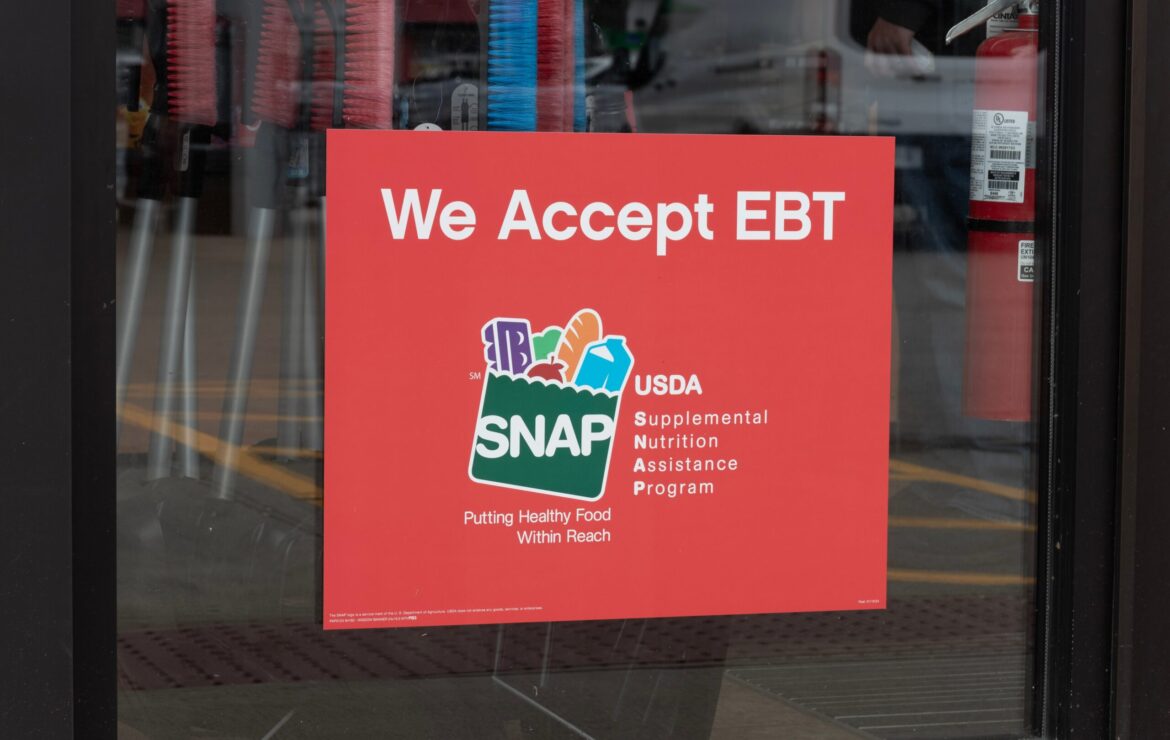
If approved, you will receive information explaining your benefit amount and certification period. Benefits are issued electronically through an EBT card.
Can You Get Emergency SNAP Benefits?
Some households with very low income or limited available resources may qualify for expedited SNAP processing.
You may potentially qualify if:
- Your household has very little income and available resources;
- Your household’s income and available resources are less than its rent or mortgage plus qualifying utility costs; or
- You are part of a migrant or seasonal farmworker household with little or no available income or resources.
Qualifying households may receive expedited SNAP benefits within seven calendar days rather than waiting through the normal application period. (otda.ny.gov)
You do not need to wait until you are completely out of food to apply for expedited SNAP.
How Much Will You Receive in SNAP Benefits?
The maximum SNAP benefit is not the amount every qualifying household receives.
For the federal fiscal year ending September 30, 2026, the maximum monthly benefits in New York range from $298 for a one-person household to $994 for a four-person household, with larger maximum benefits available for larger households.
Your actual benefit is calculated based on factors including:
- Household size
- Countable income
- Earned-income deductions
- Housing and utility expenses
- Dependent-care expenses
- Certain medical expenses for elderly or disabled household members
- Other allowable deductions
A household with some income can therefore still qualify for SNAP, but may receive less than the maximum benefit.
What Can You Buy With SNAP?
SNAP benefits can generally be used to purchase foods for the household, including:
- Fruits and vegetables
- Meat, poultry and fish
- Dairy products
- Bread and cereals
- Snack foods
- Non-alcoholic beverages
- Seeds and food-producing plants
SNAP generally cannot be used for alcohol, tobacco, vitamins or supplements, household supplies, prepared hot foods that are not otherwise eligible under an applicable program, or other non-food merchandise.
Many participating retailers also accept SNAP EBT for eligible grocery purchases made online.
Applying for SNAP in New York
SNAP can provide meaningful assistance to New Yorkers who are having difficulty covering the cost of food, including families, seniors, people with disabilities and individuals receiving home-care services.
The most important step is not to assume you are ineligible based only on your gross income. New York uses different eligibility rules depending on household circumstances, and deductions for housing, dependent care and qualifying medical expenses can affect the final calculation.
NYC residents can apply through ACCESS HRA, while residents outside New York City can use myBenefits or contact their county Department of Social Services.
If you believe you may qualify, submitting an application is the most reliable way to receive an official eligibility determination.
Related posts